New Title

Dental Implants, Dentures or Both? Understanding Modern Tooth Replacement Options

A2Z Dental • October 3, 2026

Losing one or more teeth can affect much more than the appearance of your smile. Missing teeth can make chewing and speaking more difficult and may change the way your remaining teeth function. Fortunately, modern dentistry offers several tooth replacement options that can help restore function and improve the appearance of your smile.


Depending on how many teeth are missing, the condition of your remaining teeth, your oral health, and your individual goals, your dentist may discuss options such as dental implants, dentures, or a combination of treatments.

Understanding how these options differ can help you have a more informed conversation with your dentist about your smile.


Why Replace Missing Teeth?

A missing tooth can create changes in the way your mouth functions. You may find yourself chewing more on one side or avoiding certain foods. Missing teeth can also affect how you pronounce certain words and may change the appearance of your smile.


Replacing missing teeth can help restore chewing and speaking function while providing support for your smile. The right solution depends on your individual circumstances rather than simply the number of teeth that are missing.


What Are Dental Implants?

Dental implants are designed to replace missing teeth using an implant placed in the jawbone to support a replacement tooth or dental restoration.


Because implants are supported by the jawbone, they can provide a stable foundation for tooth replacement. A dental implant restoration may be considered when one or more teeth are missing and the patient has suitable oral health and bone support.


Dental implants can be used in different tooth-replacement situations. Your dentist can determine whether they are appropriate based on your oral health, bone structure, medical history, and treatment goals.


What Are Dentures?

Dentures  are removable dental appliances designed to replace missing teeth. They can be used when several teeth or all teeth in an arch are missing.


Depending on the number and location of missing teeth, a dentist may recommend different types of dentures.


Partial Dentures

Partial dentures can replace multiple missing teeth when some natural teeth remain. They can help restore chewing and speaking while filling visible spaces in the smile.


Complete Dentures

Complete dentures are designed to replace an entire arch of missing teeth. They may be recommended when all natural teeth in the upper or lower arch are missing or need to be replaced.


Dentures are removable, which means they can be taken out for cleaning and care.


Can You Have Dental Implants and Dentures Together?

Yes. Dental implants and dentures do not always have to be considered completely separate options.

For some patients, implant-supported dentures may be an option. In this approach, dental implants can provide support for a removable denture, helping create a more stable foundation than a traditional removable denture alone.


Whether this option is appropriate depends on factors such as the condition of the jawbone, oral health, number of implants needed, and overall treatment plan.


Your dentist can explain whether implant-supported tooth replacement is suitable for your situation.


Implants vs. Dentures: What Is the Difference?

While both can replace missing teeth, implants and dentures work differently.


Dental implants are anchored into the jawbone and are designed to provide a fixed foundation for tooth replacement. Dentures, on the other hand, are removable appliances.


Some of the main differences include:


Support:
Implants receive support from the jawbone, while traditional dentures rest on the gums.


Removability:
Traditional dentures can be removed, while an implant-supported restoration may provide a more fixed or stabilized solution depending on the treatment.


Number of missing teeth:
Implants can be used to replace individual teeth or support larger restorations. Dentures may be appropriate when several or all teeth are missing.


Treatment considerations:
Implant treatment generally involves surgical placement and healing, while dentures do not require implant surgery.


Neither option is automatically right for everyone. Your dentist can evaluate your specific needs before recommending a treatment.


What Factors Determine the Right Option?

Choosing between dental implants, dentures, or a combination of both involves more than simply deciding which option looks best.


Your dentist may consider:

  • Number of missing teeth
  • Location of missing teeth
  • Condition of your remaining teeth
  • Gum health
  • Jawbone support
  • Oral hygiene
  • Overall health
  • Your treatment goals
  • Your preference for removable or more stable tooth replacement


A comprehensive dental evaluation can help determine which options are realistic for your smile.


What If You Still Have Some Natural Teeth?

Having some natural teeth remaining does not automatically mean dentures are off the table. Partial dentures can replace several missing teeth while working around the teeth that remain.


Depending on your individual situation, your dentist may also discuss other tooth-replacement solutions, including dental implants.


The condition of the remaining teeth is an important part of treatment planning. Your dentist may evaluate whether those teeth are healthy enough to remain and how they can work with the proposed restoration.


Why A Personalized Treatment Plan Matters

There is no single tooth-replacement solution that works for every patient. Two people with the same number of missing teeth may have completely different treatment recommendations because their oral health, bone support, remaining teeth, and personal goals are different.


A personalized evaluation allows your dentist to look at the complete picture before recommending treatment.

Your dentist can also explain what each option involves, including the expected process, maintenance, and long-term care.


Caring for Your Replacement Teeth

Regardless of the tooth-replacement option you choose, good oral hygiene remains important.


Patients with dentures should clean them according to their dentist's instructions and maintain good care of their gums and any remaining natural teeth. Patients with dental implants should continue brushing, flossing, and attending regular dental appointments to help maintain their oral health.


Professional dental visits also allow your dentist to monitor your restoration and surrounding oral tissues over time.


Which Tooth Replacement Option Is Right for You?

Dental implants, dentures, and implant-supported dentures can all play a role in modern tooth replacement. The right choice depends on your unique oral health, the number of teeth missing, the condition of your remaining teeth and bone, and what you want from your treatment.


Instead of choosing an option based only on what you have seen or heard, talk with your dentist about your specific situation. A thorough evaluation can help you understand your choices and what each treatment may involve.


If you are living with missing teeth and want to explore your options, schedule a consultation with A2Z Dental  to discuss dental implants, dentures, and other tooth-replacement solutions for your smile.

By A2Z Dental • September 22, 2026
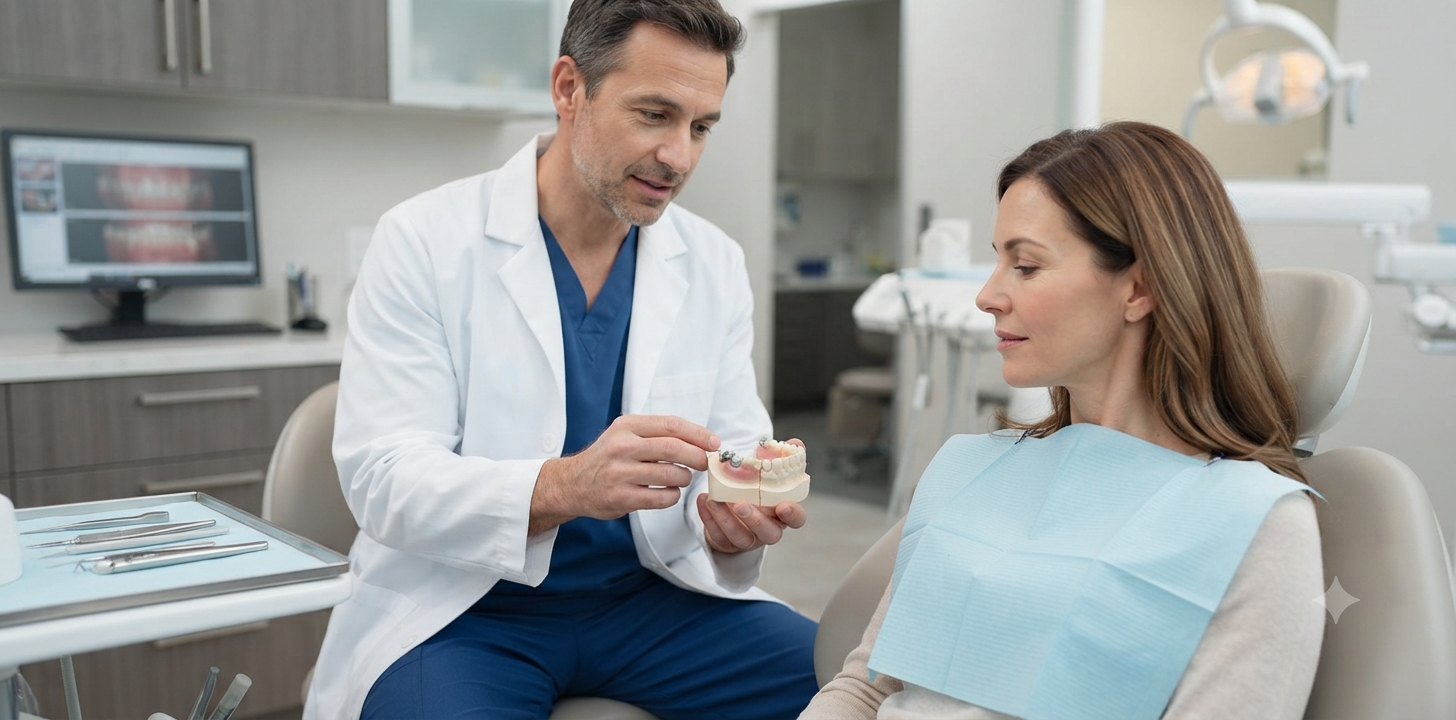
Missing several teeth can affect more than just the appearance of your smile. It may make chewing certain foods difficult, affect how you speak, and leave you feeling less confident about your smile. When multiple teeth are missing, the spaces can also change the way your remaining teeth come together when you bite and chew. If you still have some healthy natural teeth, a partial denture may be one option to help restore your smile and everyday function. Partial dentures are designed to replace missing teeth while working with the natural teeth that remain. What Is a Partial Denture? A partial denture is a removable dental appliance designed to replace one or more missing teeth in a row. According to A2Z Dental, partial dentures connect to the adjacent natural teeth to help keep them in place while allowing you to chew and speak more comfortably. Because partial dentures are removable, they can also be taken out for easier cleaning and daily oral hygiene. Your dentist can explain how to properly remove, clean, and care for your partial denture so it remains comfortable and functional. Partial dentures can be made to blend with your natural smile. The goal is to replace missing teeth while creating a natural-looking appearance and helping you continue everyday activities more comfortably. What Happens When Several Teeth Are Missing? When several teeth are missing in the same area, the gap can make everyday activities such as eating and speaking more challenging. Depending on which teeth are missing, you may find that certain foods are harder to chew or that your speech feels different. A partial denture can fill these spaces and help create a more complete smile. By replacing missing teeth, it can provide additional support for everyday chewing and help restore the appearance of your smile. The process typically begins with a dental examination. Your dentist will evaluate your teeth and overall oral health before discussing which type of tooth replacement may be appropriate for your needs. At A2Z Dental, the team can discuss your options and help determine whether partial dentures, complete dentures, or another tooth replacement solution may be suitable for your smile. How Can a Partial Denture Help? A partial denture may provide several benefits when multiple teeth are missing. Restore Missing Teeth A partial denture can fill spaces created by missing teeth, helping restore a more complete appearance to your smile. Having several missing teeth can make your smile look different, especially when the missing teeth are visible. Replacing those teeth with a partial denture can help restore the overall appearance of your smile while also supporting everyday oral function. Make Chewing Easier Missing teeth can make it harder to enjoy certain foods. You may find yourself avoiding foods that require more chewing or choosing softer foods instead. Replacing missing teeth can help restore more of the function you need for everyday eating. A properly fitted partial denture can provide replacement teeth that allow you to chew more comfortably. Your dentist can also provide guidance about adjusting to your partial denture and getting used to eating with it. Support Speaking Comfort Several missing teeth can sometimes affect speech. Teeth play a role in how certain sounds are formed, so changes in the spaces between your teeth may affect the way you speak. A properly fitted partial denture can help restore the structure of your smile and support clearer speech. Like any removable dental appliance, it may take some time to become comfortable speaking with your partial denture. With regular use, many patients become more familiar with the way their partial denture feels and functions. Removable for Easy Cleaning One of the advantages of partial dentures is that they can be removed. This makes it easier to clean the denture and maintain your regular oral hygiene routine. Your remaining natural teeth still need regular brushing and care. Keeping both your natural teeth and your partial denture clean is an important part of maintaining your oral health. Your dentist can explain the recommended cleaning routine for your specific denture and show you how to care for it properly. What Is the Process for Getting a Partial Denture? Getting a partial denture generally begins with a consultation and oral examination. Your dentist will look at your remaining teeth, the areas where teeth are missing, and your overall oral health. Your dentist may discuss your concerns, daily habits, and goals for replacing your missing teeth. This information can help determine which option may work best for your situation. If a partial denture is recommended, your dentist will take the necessary measurements or impressions to help create a denture that fits your mouth. Once the partial denture is ready, it will be fitted and checked for comfort and function. Adjustments may sometimes be needed to improve the fit. Your dentist can also explain how to put the denture in and remove it properly, how to clean it, and what to expect while you become accustomed to wearing it. Is It Normal to Need Time to Adjust? Yes. Like other removable dental appliances, a partial denture may feel unfamiliar when you first begin wearing it. You may need some time to become comfortable with the way it feels in your mouth. Eating and speaking may also feel different at first. Your dentist can provide guidance during this adjustment period. If your partial denture feels uncomfortable or does not seem to fit properly, let your dental team know rather than continuing to wear it without an evaluation. A proper fit is important for comfort and everyday function. Are Partial Dentures Right for Everyone? Not every missing-tooth situation is the same. The right solution depends on factors such as how many teeth are missing, where they are located, and the condition of your remaining natural teeth. Your overall oral health can also play a role in determining which tooth replacement option may be appropriate. A dental examination can help determine whether a partial denture is appropriate for you. Your dentist can also explain other available tooth replacement options based on your individual needs. The goal is to choose a solution that fits your oral health, lifestyle, and tooth replacement needs. How Do Partial Dentures Compare With Other Options? A2Z Dental offers different approaches to replacing missing teeth, depending on the patient's needs. Partial dentures can replace one or more missing teeth in a row and are removable. They can help fill gaps while working with the natural teeth that remain. Complete or full dentures are designed to replace an entire arch of natural teeth. They may be considered when most or all of the teeth in an arch are missing. Dental implants can also be used for tooth replacement, including implant bridges for replacing two or more teeth in a row and fixed implant-supported dentures for replacing an entire arch. Each option works differently and may be appropriate for different situations. Your dentist can discuss the available choices with you after evaluating your teeth and overall oral health. What Should You Consider Before Choosing a Partial Denture? If you are considering a partial denture, it is helpful to think about your daily needs and what you want to achieve with tooth replacement. You may want to consider how missing teeth affect your ability to chew, whether you are concerned about the appearance of your smile, and how comfortable you are with a removable dental appliance. Your dentist can explain the advantages and limitations of the available options so you can better understand what may work for your situation. A consultation also allows you to ask questions about the fitting process, adjustment period, cleaning routine, and long-term care of your partial denture. Restoring Your Smile With A2Z Dental A partial denture can help restore the appearance and function of your smile when several teeth are missing. At A2Z Dental, your dentist can evaluate your remaining teeth and overall oral health to help determine if a partial denture is right for you. Replacing several missing teeth can make everyday activities such as eating and speaking more comfortable while helping restore the appearance of your smile. With the right evaluation and a properly fitted appliance, a partial denture can become part of your regular oral care routine. If you are missing several teeth and want to explore your tooth replacement options, schedule a consultation with A2Z Dental to discuss the right solution for your smile.
By A2Z Dental • September 19, 2026
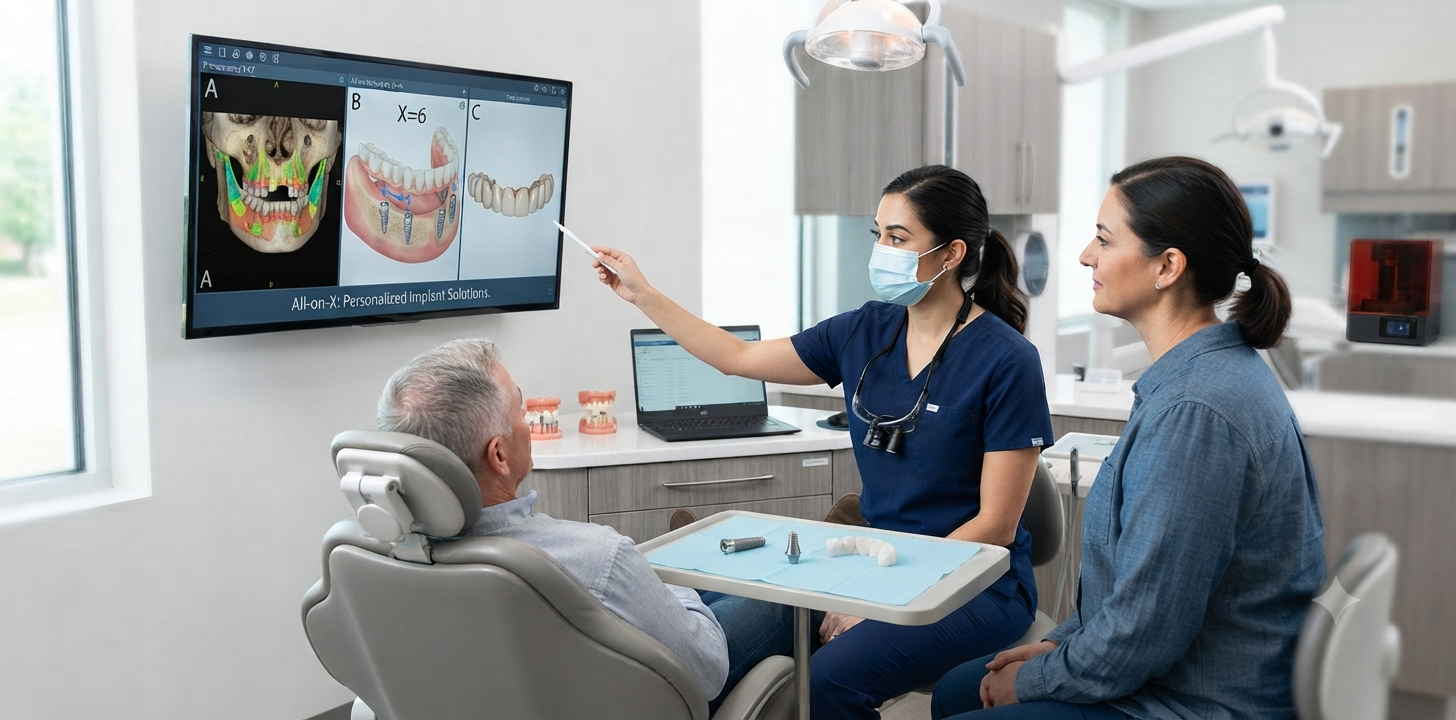
Losing most or all of your teeth can affect much more than your smile. Missing teeth may make it difficult to chew comfortably, speak clearly, or feel confident in everyday situations. Traditional dentures can replace missing teeth, but some patients may want a more stable and secure option. This is where an All-on-X dental implant restoration may be considered. What Does All-on-X Mean? All-on-X is an implant-supported approach used to replace an entire arch of missing or severely damaged teeth. Instead of placing an individual dental implant for every missing tooth, several strategically positioned implants are used to support a full-arch restoration. The “X” refers to the number of implants used to support the restoration. The exact number and positioning depend on factors such as your bone structure, oral health, and treatment needs. Once the implants are placed and have been adequately integrated with the jawbone, they can support a custom-made set of replacement teeth designed to restore the appearance and function of the smile. Who May Be a Candidate for All-on-X? All-on-X may be an option for adults who have multiple missing teeth, severely damaged teeth, or teeth that cannot be predictably restored. It may also be considered by people who are unhappy with the stability or function of traditional dentures. However, not everyone is automatically a candidate. Your dentist will need to evaluate your gums, remaining teeth, jawbone, overall oral health, and other factors before recommending treatment. How Does All-on-X Compare With Traditional Dentures? One of the main differences is how the replacement teeth are supported. Traditional dentures generally rest on the gums and can move during eating or speaking. An All-on-X restoration is anchored to dental implants, providing a more secure foundation. Implants also stimulate the surrounding jawbone, which can help reduce the bone loss that commonly occurs after teeth are lost. The result is a restoration designed to provide greater stability while maintaining a natural-looking appearance. What Does the Treatment Process Involve? The process typically begins with a detailed dental examination and imaging. Your dentist will assess the condition of your teeth, gums, and jawbone and determine whether implant-supported full-arch treatment is appropriate. If treatment is recommended, the implants are strategically placed in the jaw. Depending on your individual treatment plan, a temporary restoration may be provided while your implants heal. After the healing and integration period, the final restoration is created and securely attached to the implants. Because every patient has different needs, the timeline and treatment steps can vary. What Are the Benefits of All-on-X Restoration? For appropriate candidates, an All-on-X restoration can offer several advantages, including: Improved stability compared with traditional removable dentures A more comfortable foundation for chewing and speaking A full-arch solution supported by dental implants A natural-looking replacement for missing teeth Support for maintaining jawbone structure A fixed alternative to removable dentures in appropriate cases  The goal is not simply to replace missing teeth, but to create a restoration that works with your oral health, bite, and overall smile. Is All-on-X the Same for Every Patient? No. All-on-X treatment is highly individualized. The number and placement of implants, type of restoration, need for additional procedures, and overall treatment timeline can differ from one patient to another. A thorough examination is important because factors such as bone volume, gum health, bite, and the condition of any remaining teeth can influence your treatment options. Could All-on-X Be Right for You? If you are dealing with extensive tooth loss or struggling with loose or uncomfortable dentures, implant-supported full-arch restoration may be worth discussing with a dental professional. At A2Z Dental, an evaluation can help determine whether All-on-X or another tooth-replacement option is appropriate for your needs. Your dentist can explain the treatment process, expected results, and alternatives based on your individual oral health. A more stable smile may start with understanding your options. Schedule a consultation with A2Z Dental to learn whether All-on-X dental implant restoration could be right for you.